Budget 2026 Explained: Key Terms Every Citizen Should Know (X)
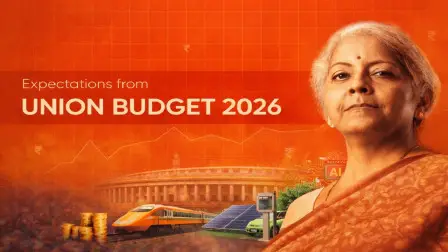
New Delhi: Union Finance Minister Nirmala Sitharaman on February 1 will present the Union Budget 2026 in the Parliament. With just days to go before the Union Budget, expectations among middle-class and salaried taxpayers are running high. Many economic terms will dominate headlines and debates.
With this Nirmala Sitharaman will become the first finance minister of the country to present the general budget nine consecutive times.
This year’s Budget comes amid global tensions and a steep 50 per cent tariff imposed by the US on Indian exports.
Here is a list of the key budget terms:
Inflation refers to a rise in prices of goods and services in an economy. It can be defined as when inflation goes up, money buys fewer things. The inflation rate shows how fast prices are increasing over a period of time.
Fiscal policy is how the government uses taxes and spending to influence the economy. Decisions on welfare schemes, infrastructure projects, and tax rates are all part of fiscal policy and are announced through the Budget.
Monetary policy is controlled by the Reserve Bank of India (RBI). It involves managing interest rates and money supply to control inflation and support economic growth.
The capital budget deals with long-term finances. It includes money the government spends on building assets like roads and railways, as well as money it borrows or recovers through loans.
Capital receipts are funds that either create a liability or reduce government assets. These include loans taken by the government, money raised through treasury bills, foreign borrowings, and loan repayments from states and Union Territories.
Capital expenditure, or capex, is money spent on creating or upgrading assets. This includes spending on infrastructure, machinery, buildings, and long-term investments that help economic growth.
The Revenue Budget focuses on the government’s day-to-day income and expenses. It includes money earned through taxes and other sources, and spending on routine needs.
Revenue receipts are earnings that the government does not have to repay. These come from taxes like income tax and corporate tax, and non-tax sources such as interest income and dividends.
Revenue expenditure is spending that does not create future assets. Salaries, pensions, subsidies, and administrative costs fall under this category.
Direct taxes are paid directly by individuals or companies to the government. Income tax and corporate tax are common examples.
Indirect taxes are charged on goods and services but paid by consumers while purchasing them. These taxes are collected by sellers and passed on to the government.
Excise duty is an indirect tax imposed on goods manufactured within India for domestic use.
Customs duty is charged on goods imported into or exported from India. Though paid by importers or exporters, the cost is often passed on to consumers.
A fiscal deficit occurs when the government’s spending exceeds its income, excluding borrowings. It shows how much the government needs to borrow to meet its expenses.
Revenue deficit is the gap between revenue expenditure and revenue receipts. It indicates whether the government’s regular income is enough to cover its routine expenses.
Primary deficit is the fiscal deficit minus interest payments on previous borrowings. It shows how much borrowing is being used for current spending needs.
Goods and Services Tax (GST) was introduced to simplify India’s indirect tax system. It replaced multiple taxes like VAT, octroi, and entry tax with a single, unified tax.
Gross Domestic Product (GDP) is the total value of all goods and services produced in the country during a specific period. It is a key measure of economic growth.
Disinvestment refers to the government selling its stake in public sector companies. By doing this, the government converts assets into cash to raise funds.


Copyright © 2026 Top Indian News